
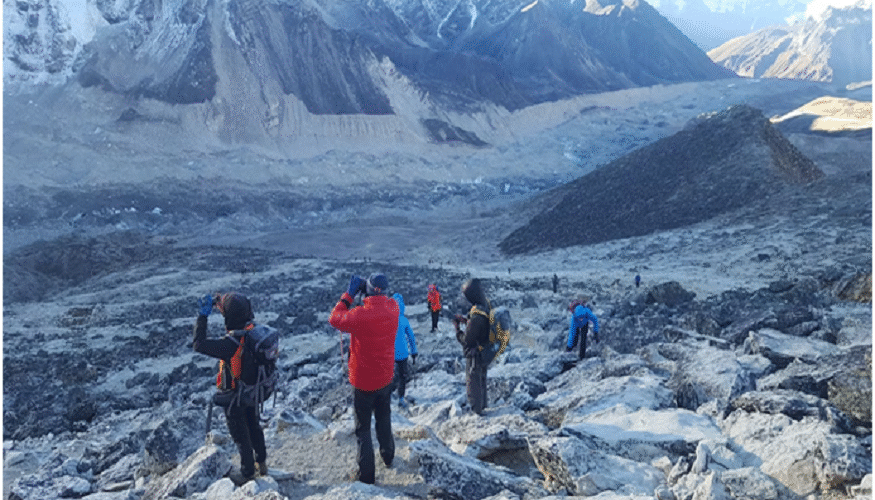
The Everest Base Camp Helicopter Tour is like one mixed thing where adventure and comfort both come together in one beautiful way, and many people are now choosing this because they want the Everest dream, but they do not want long walks or heavy, tired bodies. This trip gives one the feeling of flying inside big mountains and watching everything so close that the heart also becomes emotional. The helicopter tour is fast, easy, and very scenic, and sometimes people say it is the most magical moment in their whole life. The mountains look so near, like you can touch them, and the wind sounds around the helicopter feel like true Himalayan music. Many travelers cannot do long treks because of busy lives or little health issues, so this tour becomes the perfect option. It gives an amazing experience, a safe landing, breakfast with a mountain view, and a return back the same day. So the introduction of this tour already shows how special it is.
Overview
The Everest Base Camp Helicopter Tour overview is simple but powerful. This tour starts from Kathmandu early morning when the sky is clean, and the helicopter flies toward the Everest region with beautiful landscapes below. You see rivers, forests, Sherpa villages, and long snow mountains everywhere. It is one short way to reach near Everest Base Camp without doing many days of walking. The flight lands at Kalapatthar or near Base Camp, where views are strongest and very sharp. Here you see Mt. Everest, Lhotse, Nuptse, Ama Dablam, and many peaks standing huge and proud. This tour is for all kinds of people—solo, couples, friends, and family—even older people who cannot trek. It is luxurious, comfortable, and safe and still gives a real mountain feeling. This overview shows how helicopter tours are becoming the best option for modern travelers who want adventure but also want a comfortable and time-saving experience.
Everest Base Camp Trekking
Everest Base camp Trekking is always a big dream for many mountain lovers. It takes many days, with long walking, climbing, and passing through Sherpa villages like Namche Bazaar and Tengboche. Trekking is a slow journey but very meaningful because you feel every step of the Himalayas, see the culture, meet locals, and watch sunrise and sunset on mountains. Some days are tough, some days are relaxing, but the experience becomes a life memory. Many trekkers say this trek teaches patience, courage, and respect for nature. But many people also cannot do this trek because of the long distance, altitude, and time. For them, helicopter tours become a good replacement.
Everest Three Pass Trek
The Everest three Pass Trek is one of the hardest and most exciting treks in the Everest region. It crosses three high passes: Kongma La, Cho La, and Renjo La. This trek is for strong trekkers who want a challenge and love pushing themselves. It takes many days and brings trekkers to Gokyo Lake, Everest Base Camp, and amazing mountain viewpoints. But because it is very difficult, many people skip it. Helicopter tours are sometimes like an easy way to still enjoy high mountains without suffering high passes. People who do the three-pass trek love struggle, but people who do helicopter tours love comfort and still want the Everest feeling.
Everest Base Camp Helicopter Tour
The Everest Base camp Helicopter Tour is a main highlight because it brings super-fast access to the Everest region. The flight leaves Kathmandu, flies over the beautiful Khumbu Glacier, and lands near Kalapatthar, where the view is strong and wide. People take pictures, enjoy cold air, and feel like they are standing on top of the world. Helicopter tours are best for honeymoon couples, short-trip travelers, seniors, busy people, or anyone who wants Everest without trekking. The tour is safe, guided, and done by professional pilots who know mountains very well. It is expensive compared to trekking, but the comfort is maximum and the experience is priceless.
Everest Base Camp Luxury Trek
Everest Base Camp Luxury Trek is a soft and fancy version of classic trekking. People stay in luxury lodges, eat the best food, sleep in comfortable rooms, and still walk the same Everest pathways. It is a slow but stylish journey. Many travelers choose this because they want both comfort and trekking adventure. But still it takes many days of walking. So some people go for the helicopter return option, where they trek halfway or the full way and then fly back in a helicopter. It saves time and energy and gives amazing aerial views.
Why Helicopter Tours Are Becoming Popular
Helicopter tours are growing fast because modern travelers want quick experiences with less tired bodies. Many people have short holidays; some cannot trek long because of knee pain or health issues, and some simply want a luxury experience. Helicopter tours give everything in one package—adventure, thrill, scenery, comfort, and time saving. Also, social media is spreading this tour very fast because photos and videos look unbelievable. That is why many people are now choosing helicopter tours as the best activity in Nepal.
Best Time for Everest Helicopter Tour
The best times are spring season (March to May) and autumn season (September to November) because the sky is clear and the mountains show a strong view. Winter is also good with snow everywhere but a little cold. The summer rainy season is not so good because clouds hide mountains. Helicopter tours depend on the weather, so a clear sky gives the best experience.
Scenery You See During the Flight
From the helicopter window, the scenery is like a painting. You see green hills, villages, rivers, and big white mountains shining in sunlight. You also see Khumbu Icefall, glaciers, and sharp rock ridges that look scary but beautiful. When helicopters fly close to the Everest region, everything looks huge and majestic. Many people say they never saw such a view in life.
Landing at Kalapatthar
Kalapatthar is the most powerful viewpoint. Here you see Mt. Everest very close. When a helicopter lands, you feel cold wind and thin air but also strong excitement. People take photos and videos and enjoy a few minutes of Everest glory. It is the highlight of the whole tour.
Breakfast at Everest View Hotel
Most helicopter tours stop at Everest View Hotel for breakfast. Eating warm food while watching Everest from the window is a dream moment. The hotel is luxurious and famous for its amazing mountain panorama.
Safety of Helicopter Tour
Helicopter companies use powerful machines and highly trained pilots. Weather checks are strict, and safety rules are strong. Tours only start when the weather is good. So the safety level is high.
Who Can Do This Tour
Anybody can do it. Old people, young people, non-trekkers, couples, and families. It is comfortable and quick. People with limited fitness also can enjoy it easily.
Is a Helicopter Tour Better Than Trekking?
Both are different. Trekking is a long adventure full of culture and walking. Helicopter tours are fast and luxurious. People who want deep experience choose trekking. People who want a quick, strong view choose a helicopter tour.
Cost of Everest Base Camp Helicopter Tour
Cost is high, but value is also high. Price depends on whether it is on a private or sharing basis. Private charters are expensive but more flexible. Sharing a flight is cheaper but still comfortable.
Conclusion
The Everest Base Camp Helicopter Tour is the perfect choice for people who want the Everest dream without a heavy trek. It gives wild adventure, comfort, magic views, and life memories in a few hours. Whether you do trekking or a helicopter tour, Everest always gives an unforgettable feeling. But helicopter tours give a faster and more comfortable experience, making them the best choice for many modern travelers.
FAQs
1. How long is the Everest helicopter tour?
Around 3–4 hours from Kathmandu and back.
2. Is the helicopter tour safe?
Yes, very safe with experienced pilots.
3. Do we land at Everest Base Camp?
Mostly landing is at Kalapatthar for the best view.
4. Can older people join the tour?
Yes, it is perfect for seniors also.
5. What should I wear?
Warm clothes, sunglasses, and a good jacket because it is cold at high altitude.